Password Required
This case study is password protected. Please enter the password to continue.
Skip to main content
Back to Portfolio
Personal Lab

Season & Seed

An AI garden companion, designed and built solo from first sketch to production

Designer, Engineer, Art Director · March – October 2026

Everything, Solo
Role
7 Months, 440 Commits
Timeline
Feature-Complete, Paused
Status
Claude as Collaborator
Method

A Lab With a Garden in It

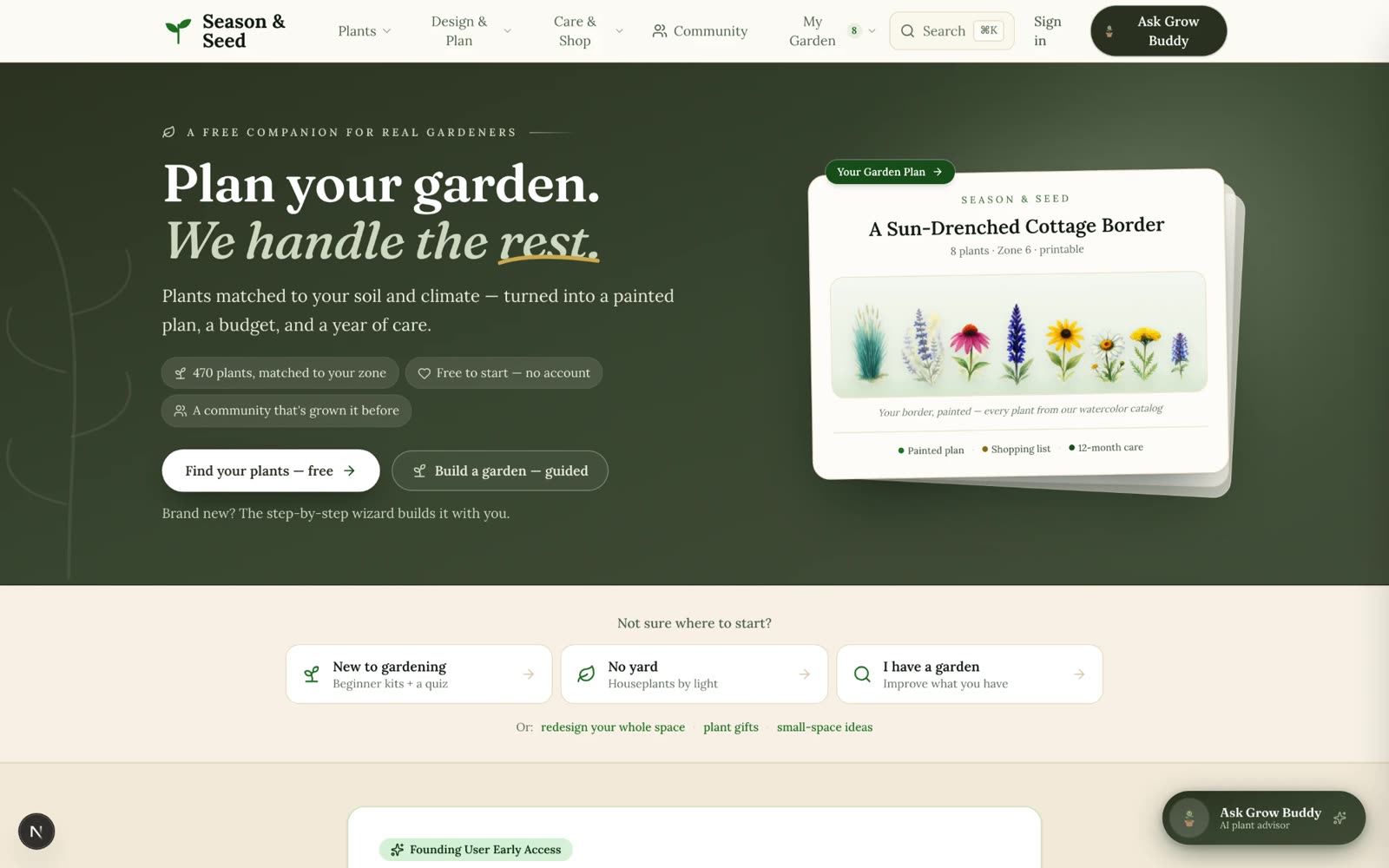
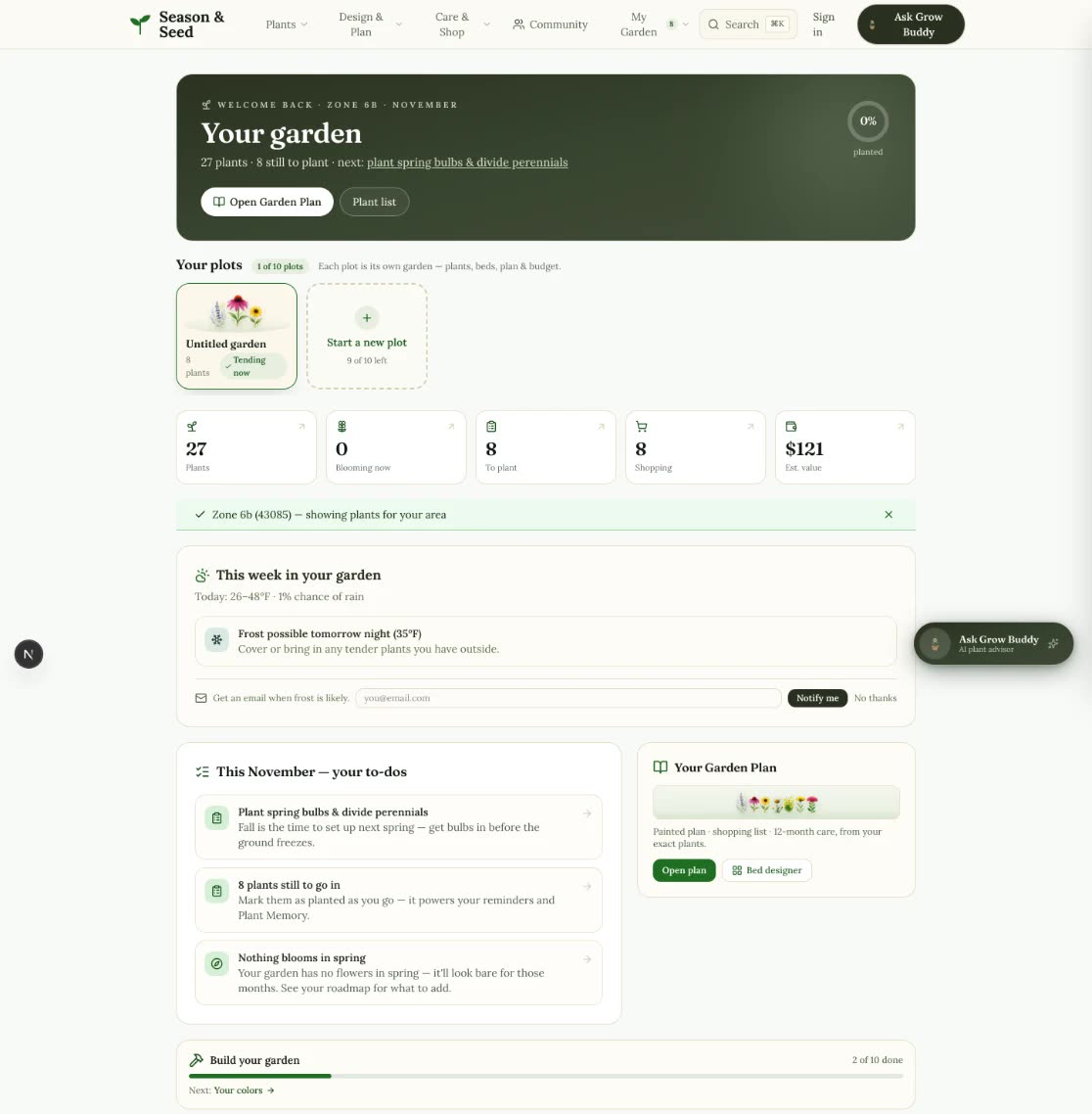
Season & Seed is an AI garden companion I designed, built, and art-directed solo over seven months: a watercolor-illustrated product that reads a photo of your yard, understands your real growing conditions, and turns them into a painted, printable garden plan with a year of care built around it. It was my laboratory for three questions I care about professionally: what a warm AI product looks like in a sea of clinical ones, how far one designer can carry full-stack product development with AI as a collaborator, and whether design-system rigor can survive solo speed.

361
Tests passing across 52 files
186
Components across 62 pages
1,180
Watercolor assets generated and curated
470
Plants in a hand-compiled catalog

Warmth Is a Moat

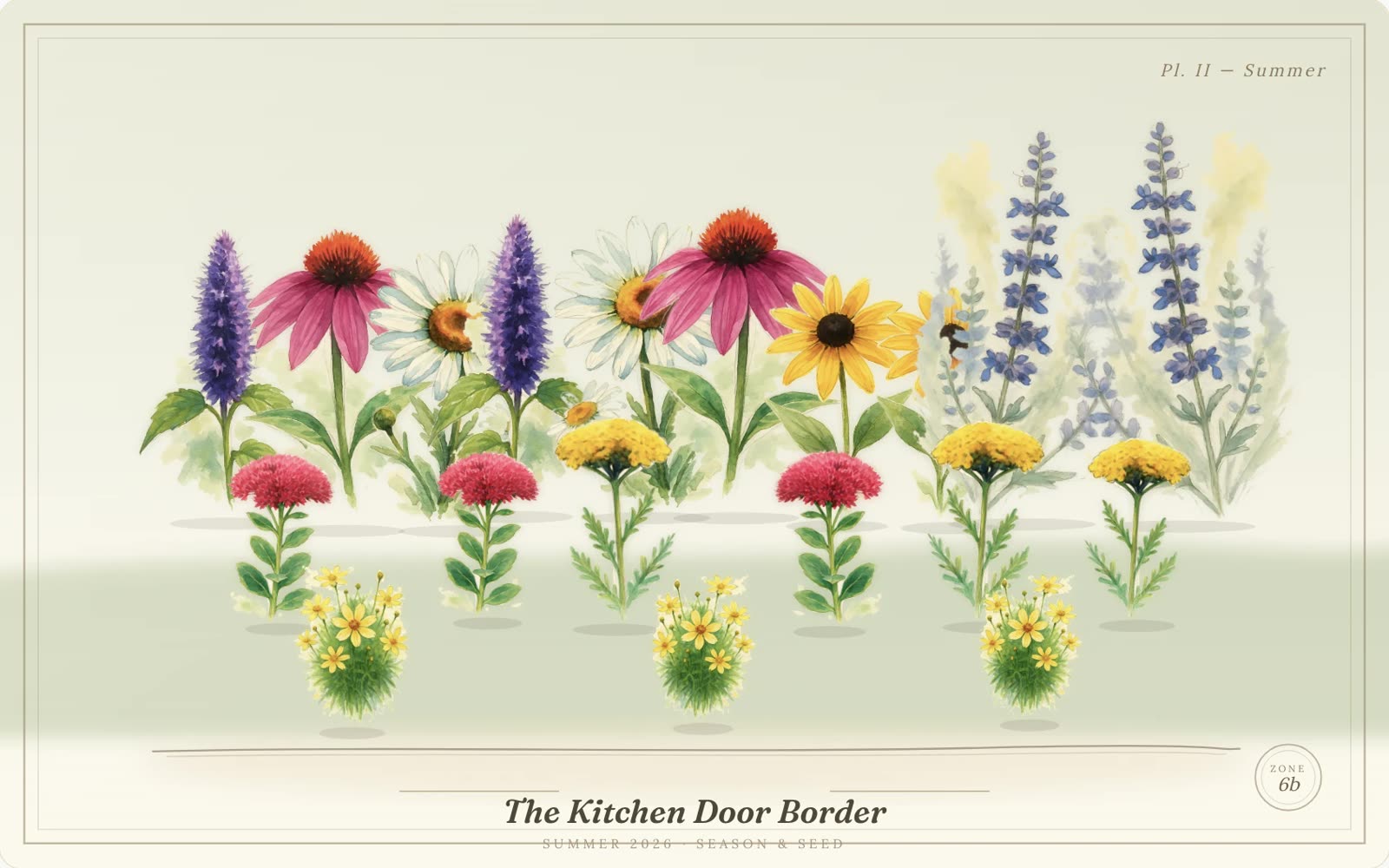
Every plant app looks like a lab: white cards, sans-serif, photo thumbnails. I went the other way, building a hand-styled watercolor identity with every one of the 470 catalog plants rendered as painted botanical art through a generation-and-curation pipeline I art-directed the same way I would direct a human illustrator: reference boards, mock-first passes, taste reviews. The bet: in a category about living things, warmth is a moat.

A System That Enforces Itself
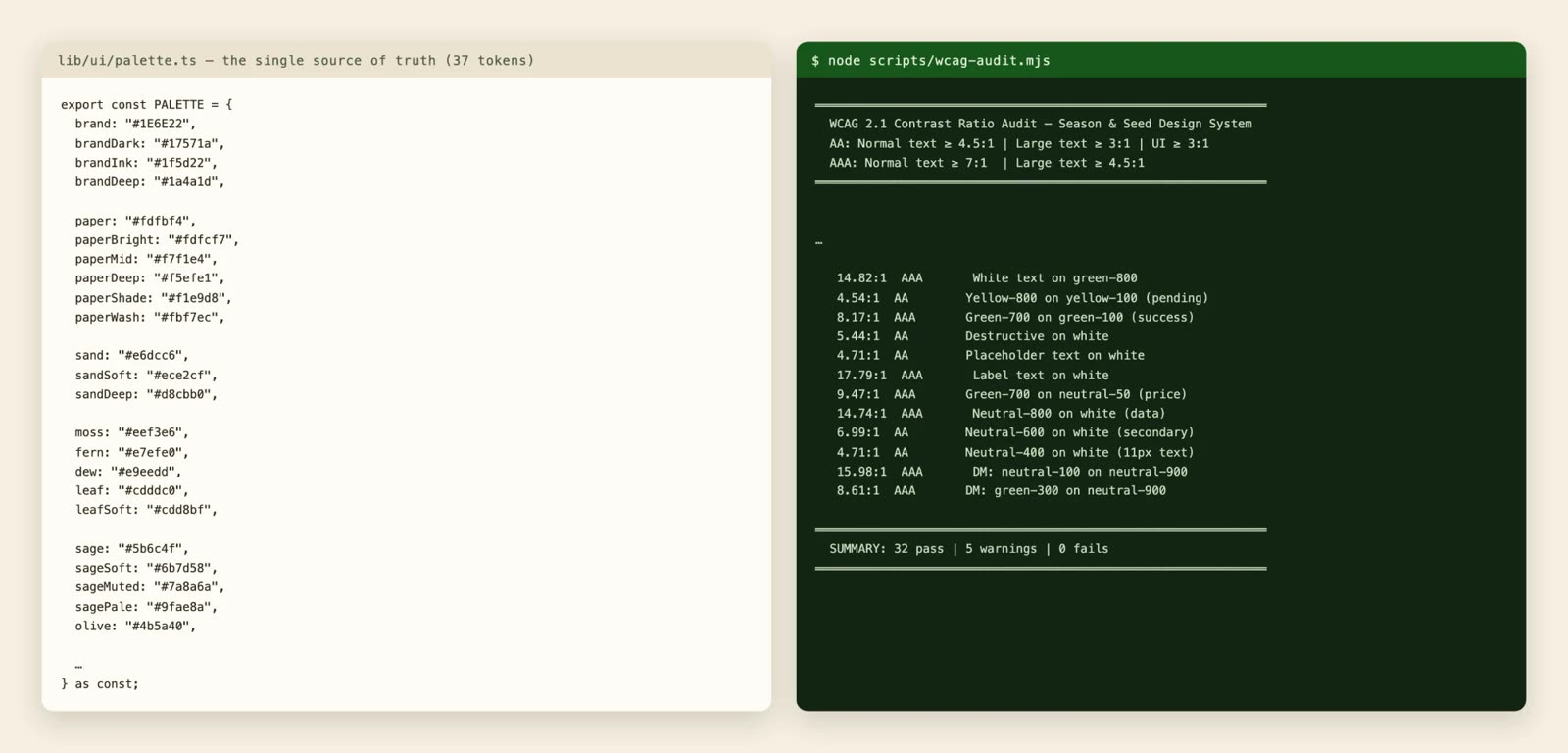
37 palette tokens are the only colors allowed in the product. A script generates the CSS from a TypeScript source of truth, and the build fails if the output drifts. Hardcoded hex isn't a review nitpick. It's a broken build.
Taste as a Process
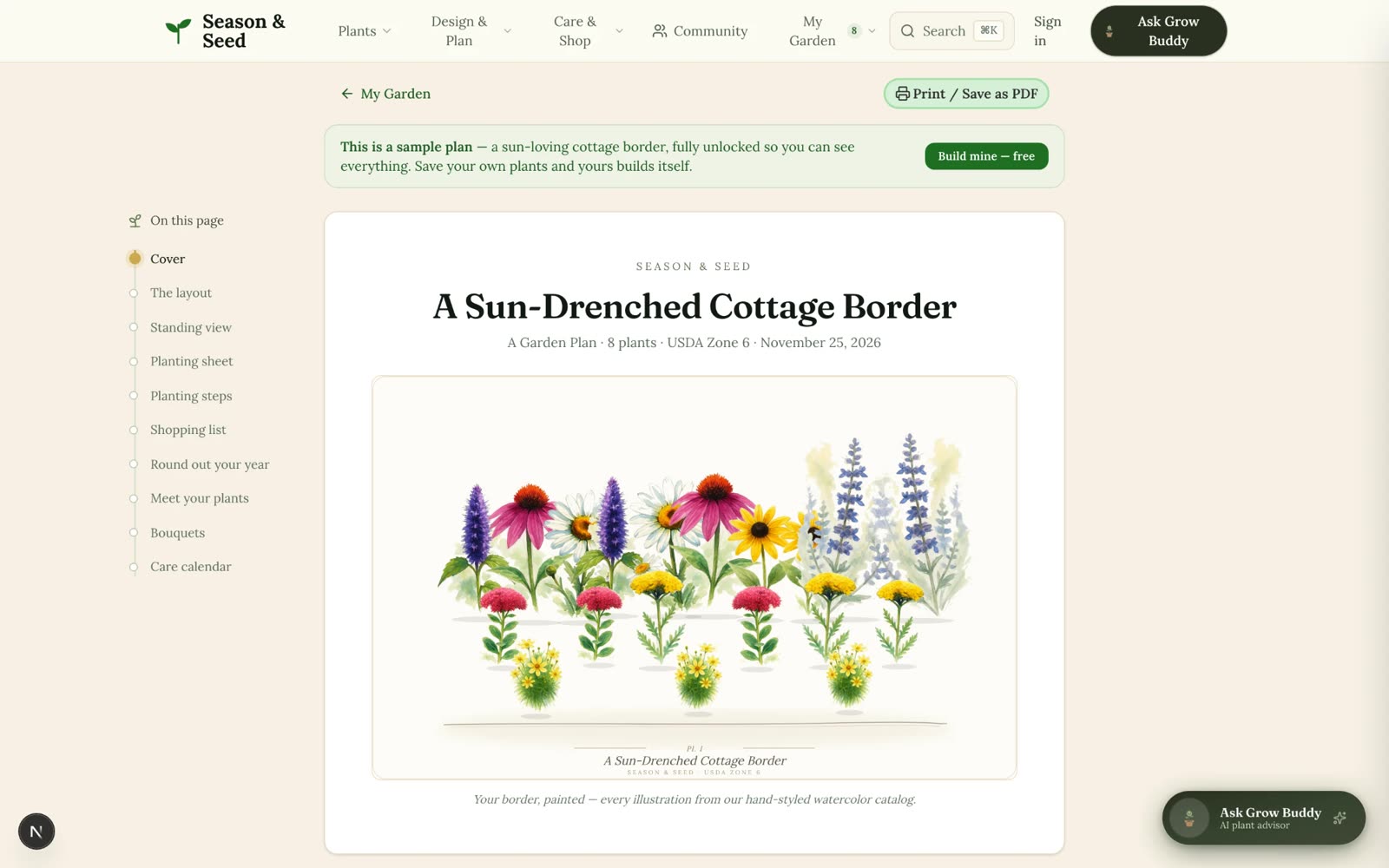
Production looks were chosen in purpose-built comparison labs, not in anyone's head: competing border recipes side by side, then five portrait treatments of the same garden, graded from catalog collage to something you'd frame.
Accessibility as a Gate
Custom WCAG contrast and structural audits run on every change with a zero-fail bar. The palette's neutrals were re-tuned to AA, and headings, labels, and skip links are checked mechanically.
The Flagship Interaction
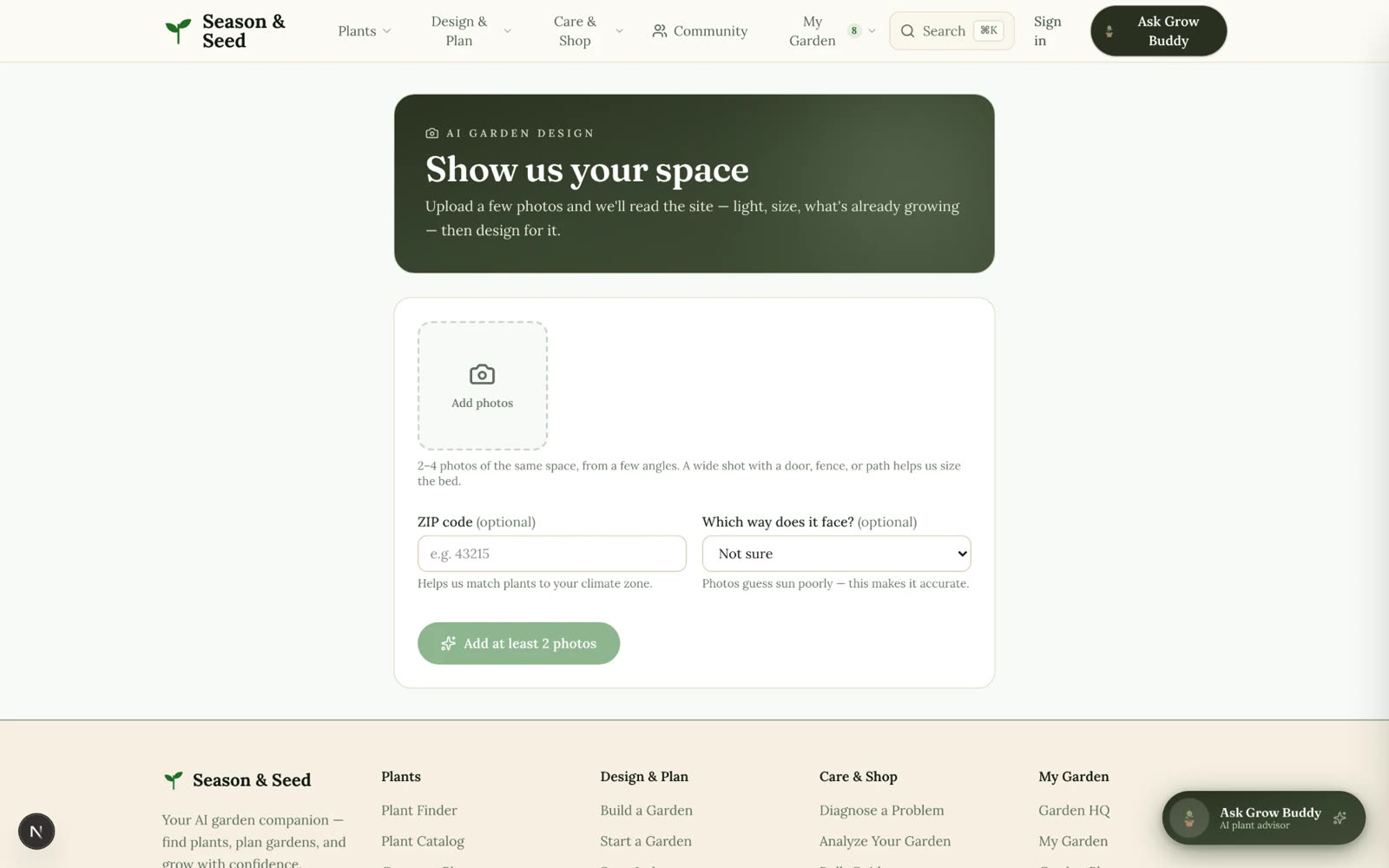
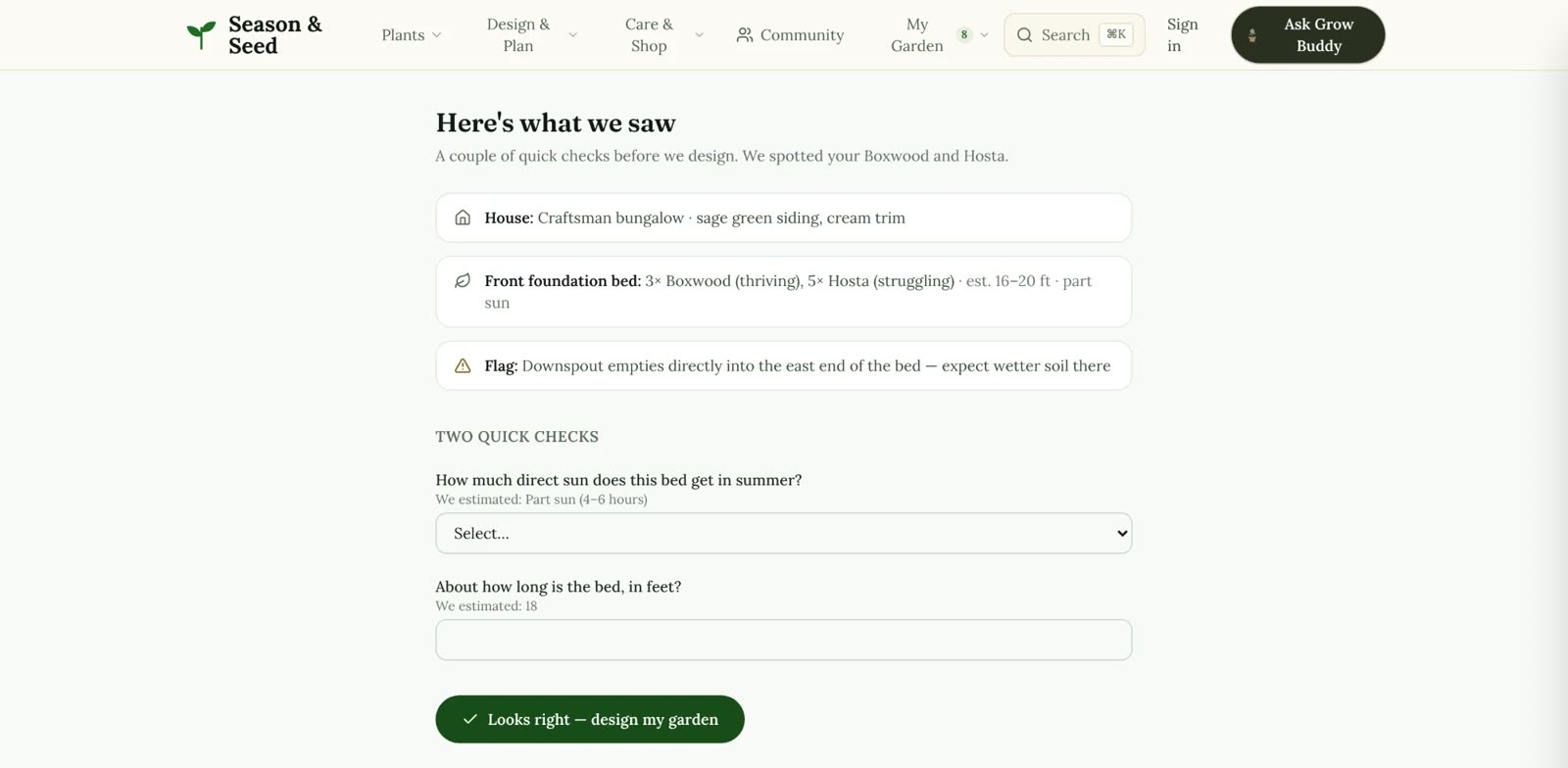
Photograph your yard, confirm the two things the AI is unsure about, and receive a painted plan with an architect's sheet, a shopping list, and a 12-month care calendar. The AI does the work; the person makes two small confirmations and gets a keepsake.

Pure Engines, Real Conditions

Next.js and TypeScript on Vercel, Postgres with row-level security on every table, and a 647 MB illustration library under version control. The architecture is deliberately boring so the interesting decisions could live in the logic layer.

Pure, Testable Engines
All product logic lives in I/O-free TypeScript engines, from bloom-gap analysis to frost-aware alerts, each with a matching test file. This single decision kept a solo codebase refactorable for seven months.
Grounded in Live Reality
Plans are assembled from the user's actual conditions: hardiness zone, USDA soil survey data, and live weather, cached server-side with graceful degradation at every layer. If a source is down, the product gives a useful answer instead of an error.
AI Engineering, Unglamorous Parts Included
Claude vision turns a yard photo into a structured site profile, with prompt caching that cut retry costs roughly 10x and a measured model migration that cut vision cost by a third. Per-render costs are tracked in code next to the pricing constants.
Security Posture
Rate limiting on every public endpoint, validation on every input, and a five-pass adversarial code review that caught a database conflict bug before it could silently break signups in production.
“In a category about living things, warmth is a moat.”

A One-Person Studio with an AI Staff

Claude worked as a pair across every discipline: design, code, copy, security review, financial modeling. The collaboration had standards, not vibes, and the same operating rigor I bring to a 16-person org, applied to a team of one.

Standards, Not Vibes
Working agreements are codified in checked-in instruction files: naming rules, token-only colors, test requirements, accessibility gates, and deploy rituals.
It Reviewed Itself While I Slept
Autonomous routines ran a daily production smoke check, a daily performance watch against a rolling latency baseline, a weekly multi-agent code review, and a weekly design-drift audit.
Documentation That Stays Honest
Every feature concept carries a built-status block that must be updated when the thing ships, so the docs told the truth for seven months.
Decision Hygiene
Pricing and strategy were stress-tested through structured multi-perspective deliberations, with every assumption tagged as verified, industry estimate, or illustrative.

Proved the Craft, Parked the Business

Season & Seed reached feature-complete pre-launch: a live product with free founding access. I paused active development in October 2026 and parked the business question deliberately. The work stands as a complete demonstration of product thinking, design-system craft, full-stack execution, and AI-augmented process.

The Product, on Paper

Next Project
IDC